Selecting the right processor can make or break an industrial PC deployment. In this guide, we break down the N100 vs J6412 vs Core i5 Industrial PC comparison across performance, power efficiency, reliability, and cost. Whether you are building an IoT gateway, an edge computing node, or a high-performance machine vision system, understanding these three processors will help you make a confident, application-driven decision.
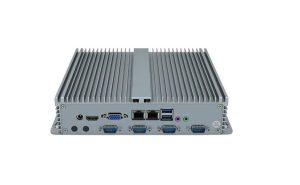
Quick Overview of N100, J6412, and Core i5 Processors
Choosing the right processor for an industrial PC is one of the most important decisions in any deployment. The Intel N100, Intel J6412, and Intel Core i5 each represent a different tier of performance, power, and purpose. Understanding their key differences helps engineers and system designers match the right hardware to the right task.
The N100 is an entry-level processor built on the Alder Lake-N architecture, designed for low-power and cost-sensitive applications. The J6412 is a Jasper Lake embedded processor built specifically for industrial-grade stability and long-term availability. The Core i5 is a mainstream high-performance CPU suited for workloads that demand serious computing power.
Key Performance Comparison: Speed, Cores, and Power Efficiency
The N100 uses a single-cluster Alder Lake-N design with four efficient cores and no performance cores. The J6412 is based on the older Jasper Lake architecture, also offering four cores but with lower single-thread performance compared to the N100. The Core i5, depending on the generation, delivers significantly higher clock speeds and supports hyper-threading for better multitasking across complex tasks.
In benchmark comparisons, the Core i5 leads by a wide margin in CPU-intensive tasks such as image processing and real-time control loops. The N100 outperforms the J6412 in most modern workloads despite being a newer entry-level chip. For TDP, the N100 and J6412 both operate under 10 watts, while a typical industrial Core i5 ranges from 15 to 65 watts depending on configuration and cooling design.
Memory support also differs across the three processors. The N100 and J6412 support LPDDR4 memory, while the Core i5 typically supports faster DDR4 or DDR5 with higher bandwidth. Higher memory bandwidth directly impacts performance in data-heavy industrial applications such as machine vision and real-time logging.
Industrial Application Suitability
The N100 is well suited for lightweight automation tasks, IoT gateways, and basic HMI systems where low power draw and compact form factor matter most. It handles simple data collection, local processing, and interface control without generating excessive heat. It is a strong choice when the workload is predictable and moderate in intensity.
The J6412 targets stable industrial control environments such as edge computing nodes and PLC integration points. Its embedded design prioritizes long product lifecycles over raw performance. It is a reliable choice for environments where consistency and vendor support over many years are critical.
The Core i5 is the right processor for demanding industrial applications such as AI-based machine vision, CNC control systems, and real-time data analysis. These workloads require high single-thread performance and fast memory bandwidth. The Core i5 handles parallel tasks and heavy software stacks that the N100 and J6412 simply cannot manage efficiently.
Graphics and Multimedia Capabilities
All three processors include integrated graphics, but their capabilities differ meaningfully. The Core i5 features a higher-tier integrated GPU, which provides significantly better graphics performance than either the N100 or J6412. The N100 includes updated integrated graphics that still outperform the older generation GPU found in the J6412.
For industrial panel PCs that require multi-display output, the Core i5 and N100 both support three or more simultaneous displays in most configurations. The J6412 typically supports dual-display setups, which is adequate for standard HMI or monitoring applications. Vision systems, 3D dashboards, and high-resolution inspection software benefit the most from the Core i5 graphics advantage.
In graphics-accelerated HMI applications, smooth rendering and fast screen refresh rates reduce operator error and improve response time. Low-end GPU performance in the J6412 may create bottlenecks when running complex visualization software continuously. Selecting a processor with adequate integrated graphics is therefore as important as CPU performance in display-heavy deployments.
Reliability, Lifespan, and Industrial Stability
The J6412 was designed from the ground up as an embedded processor, meaning it is validated for extended temperature ranges, continuous operation, and long-term supply availability. It commonly comes with a seven-year or longer product lifecycle guarantee, which is critical for industrial equipment that cannot be easily replaced. This makes it uniquely dependable in environments where hardware consistency is non-negotiable.
The N100, while a newer and more capable chip, is positioned closer to the consumer segment and may have a shorter guaranteed availability window. The Core i5 is a mainstream commercial processor, and its industrial suitability depends heavily on how the system integrator validates and packages it. Both the N100 and Core i5 can perform reliably in industrial settings when paired with proper thermal management and ruggedized enclosures.
Industrial environments often involve vibration, dust, humidity, and wide temperature swings. Processors with lower TDP generate less heat, which reduces thermal stress on surrounding components during 24/7 operation. Regardless of CPU choice, the overall system design including cooling, enclosure rating, and power input quality determines long-term field reliability.
Cost vs Performance Analysis
The N100 offers the lowest entry cost among the three options while still providing capable modern performance. For budget-conscious deployments that do not require heavy computation, it delivers excellent value. It is the most economical path for large-scale rollouts of edge terminals or simple monitoring nodes.
The J6412 sits in the mid-range price tier and its cost is justified by its embedded-grade design, long lifecycle support, and proven industrial reliability. Buyers pay not just for processing power but also for the assurance of multi-year hardware continuity. For industries with strict procurement and maintenance cycles, this predictability has real financial value.
The Core i5 carries the highest cost and the highest power and cooling requirements, but it is the only option among the three that can handle truly demanding industrial AI and processing workloads without compromise. When the cost of downtime or processing delays is factored in, the performance premium of the Core i5 often justifies itself. Total cost of ownership, not just unit price, should guide the final purchasing decision.
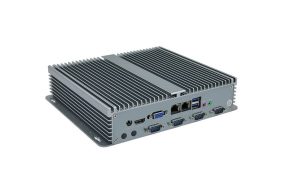
Final Recommendation: Which CPU Should You Choose?
Choose the N100 if your priority is low power consumption, compact design, and cost efficiency for straightforward industrial tasks. It is the best option for IoT gateways, thin clients, and lightweight automation controllers. Its modern architecture also gives it a clear performance edge over the J6412 in everyday computing scenarios.
Choose the J6412 if your project demands long-term hardware stability, extended lifecycle guarantees, and proven embedded-grade durability. It is the safest choice for mission-critical control systems where supply continuity matters more than performance gains. Its industrial pedigree makes it a trusted solution in regulated and safety-sensitive environments.
Choose the Core i5 if your application involves machine vision, real-time analytics, AI inference, or any workload that requires serious computational power. It is the only processor in this group that can scale with growing software demands over time. For high-performance industrial computing where downtime is costly and processing speed is essential, the Core i5 remains the clear and confident choice.
Conclusion
Each processor in the N100 vs J6412 vs Core i5 Industrial PC comparison serves a distinct purpose. The N100 delivers modern efficiency at a low cost, the J6412 offers unmatched embedded-grade stability for long-term deployments, and the Core i5 powers the most demanding industrial workloads. Matching the right CPU to your specific application is not just a technical choice. It is a strategic investment in reliability, performance, and operational continuity.
Ready to Choose the Right Industrial PC for Your Application?
Every industrial environment has unique requirements, and selecting the right CPU is the foundation of a reliable and efficient system. Whether you need the energy-saving simplicity of the N100, the long-term stability of the J6412, or the raw computing power of the Core i5, there is a solution designed for your exact workload. Taking the time to match processor capabilities to application demands will save cost, reduce downtime, and extend the service life of your equipment.
If you are unsure which configuration fits your project, our team is ready to help. Contact us today to discuss your requirements and get a tailored recommendation from our industrial computing specialists. The right industrial PC starts with the right processor, and we are here to help you make that decision with confidence.