An industrial computer features ruggedized hardware built for harsh operating environments and 24/7 continuous operation. Conversely, a commercial pc operates inside climate-controlled office settings with routine daily workloads. Industrial systems deliver extended component lifecycle stability, wide operating temperature thresholds, and sealed fanless cooling to block dust ingress. Commercial grade pcs depend on active internal cooling fans and face rapid hardware revisions. Procurement managers and technical directors must carefully evaluate environmental risks to control overall total cost of ownership before deployment.
Industrial PC vs Commercial PC: Quick Comparison Table
| Feature | Industrial PC | Commercial PC |
|---|---|---|
| Designed For | Industrial automation, machine control, and continuous operation | Office work, personal computing, and general applications |
| Operating Environment | Built for harsh environments with dust, vibration, temperature changes, and electrical interference | Designed for clean and controlled indoor environments |
| Operating Time | Supports 24/7 continuous operation | Typically designed for normal daily usage |
| Durability | Rugged construction with industrial-grade components | Standard hardware with limited environmental protection |
| Cooling System | Often uses fanless or industrial cooling designs for better reliability | Usually relies on active fans for cooling |
| Temperature Range | Wider operating temperature tolerance | Limited temperature range |
| Connectivity | Provides industrial interfaces such as RS232/RS485, GPIO, CAN bus, and multiple Ethernet ports | Mainly includes consumer interfaces such as USB, HDMI, and standard network ports |
| Hardware Lifecycle | Long product availability and stable hardware platforms | Shorter lifecycle due to frequent consumer hardware updates |
| Customization | Highly customizable for specific industrial requirements | Limited customization options |
| Maintenance Requirements | Lower maintenance due to rugged design and fanless options | Requires more frequent maintenance and component replacement |
| Typical Applications | Factory automation, robotics, machine vision, energy systems, transportation, and edge computing | Office applications, entertainment, business software, and everyday computing |
Environmental Resilience Comparison
Temperature Tolerances and Ingress Protection
Desktop computers experience rapid hardware failure inside harsh conditions. Standard commercial systems maintain a narrow operating temperature threshold between 0°C and 35°C. Conversely, high-grade industrial hardware operates reliably across high temperature ranges from -40°C to 70°C. Heavy aluminum chassis walls protect internal microprocessors from severe thermal stress. A specialized rugged design prevents continuous thermal throttling during intense computing workloads. System designers also evaluate environmental thermal resistance to protect internal memory modules from premature failure.
Physical ingress seals protect sensitive internal electronics from solid particulate accumulation and direct water immersion. Enclosures rated at IP65 or IP69K completely block microscopic dust particles and high-pressure liquid washdowns. These protection levels prevent liquid penetration during routine chemical cleaning cycles. Hazardous processing facilities utilize class 1 div 2 industrial pcs to prevent internal electrical sparks that could ignite flammable ambient vapors.
| Performance Parameter | Industrial Specification | Commercial Specification |
|---|---|---|
| Standard Operating Temperature Range | -40°C to 70°C | 0°C to 35°C |
| Ingress Protection Level | IP65 / IP69K | Unrated |
| Chassis Enclosure Material | Heavy Aluminum / Steel | Plastic / Sheet Metal |
Vibration Shock Resistance and Fanless Design
Heavy factory machinery generates constant structural movement and sudden kinetic impacts during daily operations. An industrial computer incorporates a heavy ruggedized body to absorb extreme physical stresses. Mechanical hardware engineers integrate shock and drop resistance directly into internal component mounting structures. Rigorous laboratory testing confirms long-term hardware durability through official mil-std-810 certification.
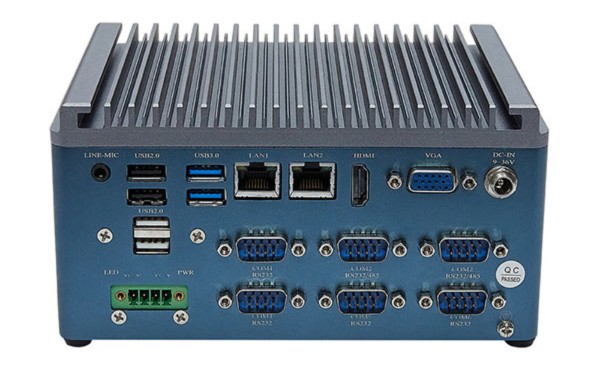
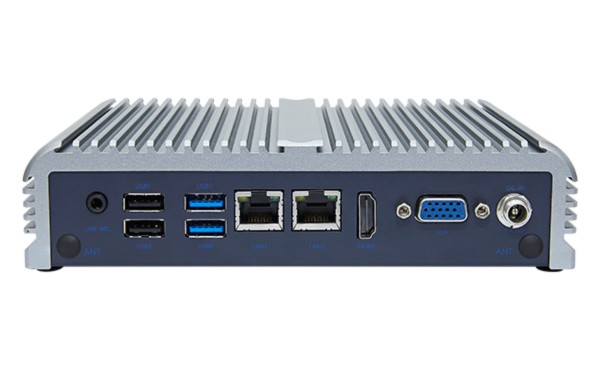
Active internal cooling fans represent common mechanical failure points in standard desktop systems. Passive fanless cooling removes moving parts completely. Conductive heatsinks transfer internal processor heat directly out to external chassis fins. Sealed fanless cooling prevents harmful dust ingress while maintaining stable compute performance across industrial environments.
Superior build quality stops printed circuit board flexing during heavy physical strain. Heavy metal outer casing offers solid structural resistance against continuous physical impacts. Plant operators avoid unexpected operational downtime by eliminating motorized fan assemblies.
Core Architecture and Computing Power
Shared Hardware Components and Ruggedization
An industrial computer shares central microprocessors, system memory modules, and solid-state storage devices with standard office hardware. However, industrial motherboard designs utilize reinforced circuit board layers and heavy-duty component trace paths. System integrators select industrial grade pcs to guarantee stable voltage regulation inside harsh factory environments. These specialized mainboards incorporate solid-state capacitors and wide-temperature silicon components to prevent continuous degradation from high ambient heat and electrical noise.
Thermal dissipation designs differ fundamentally from consumer hardware assemblies. Commercial grade pcs depend on thin copper heat pipes optimized for short operational bursts. Conversely, rugged computer chassis designs use thick aluminum conductive blocks to transfer thermal energy directly to heavy exterior heatsink fins. This heavy-duty computing design prevents processor performance throttling under continuous high-stress workloads. Specialized internal layouts also support internal i/o and expansion cards without obstructing critical heat transfer pathways.
Industrial Computer vs PLC Processing Flexibility
Factory automation systems historically relied on Programmable Logic Controllers (PLCs) to manage repetitive assembly tasks. PLCs execute simple step-by-step logic loops through rigid control software. Conversely, an industrial computer handles high-intensity software applications like real-time computer vision and predictive maintenance modeling. Powerful x86 microprocessors process multi-threaded algorithms rapidly, which grants control engineers superior software flexibility for complex edge processing operations.
System integrators demand high physical adapter throughput for modern factory networks. Standard automation setups require extensive i/o connections to gather real-time data from hundreds of external sensors simultaneously. In addition, automated inspection stations require extensive i/o ports alongside specialized PCI Express hardware expansion slots. Upgraded system boards support customizable i/o and expansion interface modules to connect legacy equipment directly to modern cloud networks.
| Control Unit Class | Primary Processor Architecture | Hardware Modular Flexibility | Primary Application Profile |
|---|---|---|---|
| Rugged IPC System | Multi-Core x86 Processor | Custom adapter bus slots | Complex edge AI and data analytics |
| Programmable Logic Controller | Dedicated Microcontroller | Fixed proprietary modules | Simple sequential machine control logic |
Workload Demands and Form Factors
Continuous 24/7 Operational Stability
Commercial desktop computers support standard eight-hour work shifts inside climate-controlled office spaces. Standard office systems undergo regular operating system reboot cycles, routine software updates, and long thermal rests during overnight shutdowns. Conversely, a heavy-duty industrial pc maintains continuous hardware performance across non-stop 24/7 production shifts year round.
Complex manufacturing facilities require steady sensor data collection without sudden software freezes, thermal degradation, or unpredicted hardware failures. High-volume assembly plants cannot tolerate unexpected system restarts during critical operational cycles.
Uninterrupted daily usage creates constant electrical stress and thermal loads on internal microprocessors and motherboard traces. Robust power delivery circuits protect delicate solid-state components against severe voltage spikes, harmonic electrical distortion, and electromagnetic noise on busy factory floors. This heavy-duty electrical engineering ensures reliable operation during long production runs.
Industrial processing plants depend on steady real-time computing throughput to prevent expensive machine stoppages, unmanaged safety hazards, and spoiled production batches.
Panel PCs and Industrial All-in-One PC Units
System integrators select specialized hardware form factors to overcome tight physical space constraints inside crowded processing facilities. An industrial all-in-one pc integrates a high-resolution touchscreen display screen and a powerful computing node into a single sealed outer chassis.
Machine operators mount these integrated control systems directly onto outer electrical cabinet doors, heavy machinery frames, or mobile workstation carts. This consolidated display assembly streamlines human-machine interface operations while saving valuable floor space across demanding industrial settings.
Different production floors present unique spatial, mounting, and environmental installation challenges. Modular display systems separate the visual touchscreen glass from the main computing box using robust interconnect cabling. This modular architecture simplifies technical maintenance routines when plant engineers service internal storage drives, power supplies, or specialized expansion cards.
Modern factory automation deployments utilize an industrial all-in-one pc to display real-time assembly metrics, adjust automated conveyor motor speeds, and record local telemetry for every manufacturing application.
Product Lifecycle and Total Cost of Ownership
Long-Term Component Freeze and Supply Chain
Standard commercial grade pcs undergo rapid design revisions every two to three years. Component manufacturers update motherboards, microprocessors, and system chipsets frequently during these short lifecycle windows. These continuous hardware changes create major software compatibility issues for industrial automation operators. Every unexpected component modification forces system engineers to re-validate custom software applications, operating system builds, and peripheral hardware drivers.
Conversely, an industrial pc deployment provides stability through a long lifecycle component freeze program. Specialized hardware vendors guarantee the exact bill of materials for five to ten years. Plant managers easily purchase identical replacement units without re-testing software images, modifying security protocols, or adjusting system configurations.
Technical teams integrate identical hardware expansions into active production lines seamlessly. This predictable long-term hardware availability simplifies supply chain planning across multi-year factory deployment projects.
TCO Analysis and Long-Term Reliability
Procurement managers often evaluate hardware investments strictly by initial capital expenses. A commercial pc requires a lower upfront purchase cost for standard office installations. However, routine hardware failures inside harsh operating environments quickly drive up operational expenses. Unplanned machine downtime, emergency maintenance technician service calls, complex system re-configurations, and frequent replacement units increase total operational costs significantly over time.
Deploying rugged computing systems alters this financial calculation completely. A higher initial capital expenditure yields a much lower total cost of ownership by preventing costly unplanned production outages. Long-term hardware reliability protects critical custom software investments, preserves total plant productivity, reduces spare parts inventory burdens, and eliminates recurring hardware replacement costs.
Factory engineers avoid catastrophic downtime while maintaining stable throughput across multi-year manufacturing cycles.
| Financial Performance Parameter | Industrial Platform | Commercial Desktop |
|---|---|---|
| Initial Capital Expense | Higher initial investment | Lower upfront purchase cost |
| Platform Supply Lifecycle | 5 to 10 year component freeze | 2 to 3 year product lifecycle |
| Operational Maintenance Costs | Minimal servicing expenses | High maintenance and repair expenses |
Hardware Selection Guide for 2026 Deployment
Operational Environment Assessment
Engineering teams must thoroughly evaluate physical deployment locations before selecting new compute platforms. Harsh factory floors present extreme ambient temperature swings, continuous mechanical vibration, and heavy airborne dust particles. Operating reliably within harsh industrial environments requires purpose-built hardware designs with thick metal enclosures. Facilities handling volatile chemical gases require specialized class 1 div 2 industrial pcs to prevent internal electrical sparks from igniting ambient vapors.
Technical directors must also audit physical mounting limits and spatial constraints inside crowded industrial settings. Standard electrical control cabinets require specific clearance dimensions to maintain passive air convection paths around external cooling fins. Plant operators check power source reliability and ambient airflow patterns before mounting hardware. Maintenance staff need direct physical access to cable ports and mounting brackets for fast field servicing.
| Assessment Parameter | Environmental Exposure Threshold | Required Hardware Defense |
|---|---|---|
| Thermal Limits | Sustained heat above 40°C | Extruded aluminum heatsink chassis |
| Ingress Threat | High-pressure washdown water | Fully sealed IP65 or IP69K enclosure |
| Mechanical Stress | Structural machine movement | Mil-spec component shock isolation |
Deployment Decision Framework
Engineering managers need a structured decision framework when choosing the right type of pc for automation lines. System designers must evaluate daily processing throughput demands alongside specific software application requirements. Advanced edge computing workloads like real-time computer vision require multi-core x86 processors. High-bandwidth automation workloads also demand dedicated board-level expansion slots for specialized hardware accelerator cards.
Procurement teams contrast initial purchasing budgets against long-term operational stability demands. Standard commercial grade pcs lack the specialized serial ports and isolated power circuits necessary for noisy machinery environments. Advanced production facilities require extensive i/o capabilities to connect legacy field sensors directly to central control networks. Choosing modular computing architectures ensures straightforward system expansion during future factory upgrades. Long-term platform freezes reduce supply chain headaches over multi-year deployment lifecycles.
Thorough environmental testing and hardware validation before deployment prevents expensive operational downtime during critical production cycles.
FAQ
How long does an industrial computer last compared to a commercial desktop?
An industrial computer operates reliably for 5 to 10 years using component freeze programs. Conversely, standard commercial grade pcs require replacement every 2 to 5 years due to rapid hardware revisions. Extended platform lifespans lower total operational costs significantly over time.
What temperature range can a rugged industrial pc withstand?
Heavy industrial hardware tolerates wide thermal limits ranging from -40°C to 70°C. Heavy aluminum chassis walls prevent thermal performance throttling during intense computing workloads. Standard office platforms only function safely between 0°C and 35°C.
Why are fanless designs important for harsh environments?
Passive fanless cooling eliminates internal motorized fans to remove mechanical failure points. Conductive heatsinks transfer internal processor heat directly out to exterior fins. This sealed design stops microscopic dust accumulation and protects sensitive electronics from liquid damage.
What physical protection ratings do rugged computing systems feature?
Rugged system deployments feature specialized ingress protection ratings and military test standards:
- IP65 and IP69K ratings block microscopic dust particles and high-pressure liquid washdowns.
- MIL-STD-810 certifications confirm mechanical shock and continuous vibration resistance.