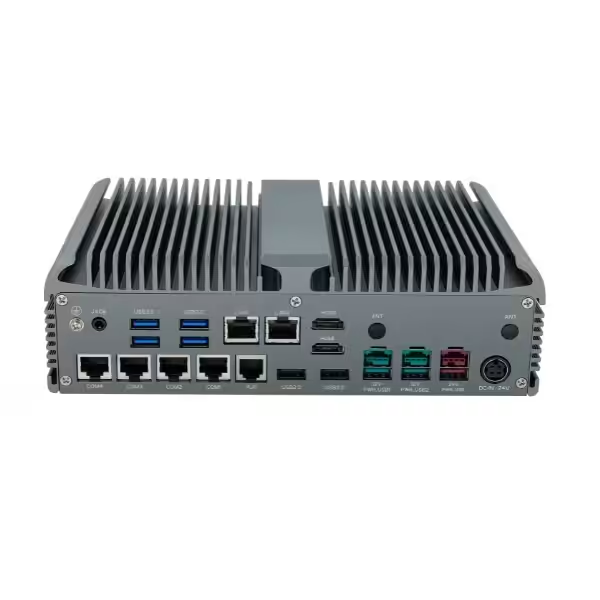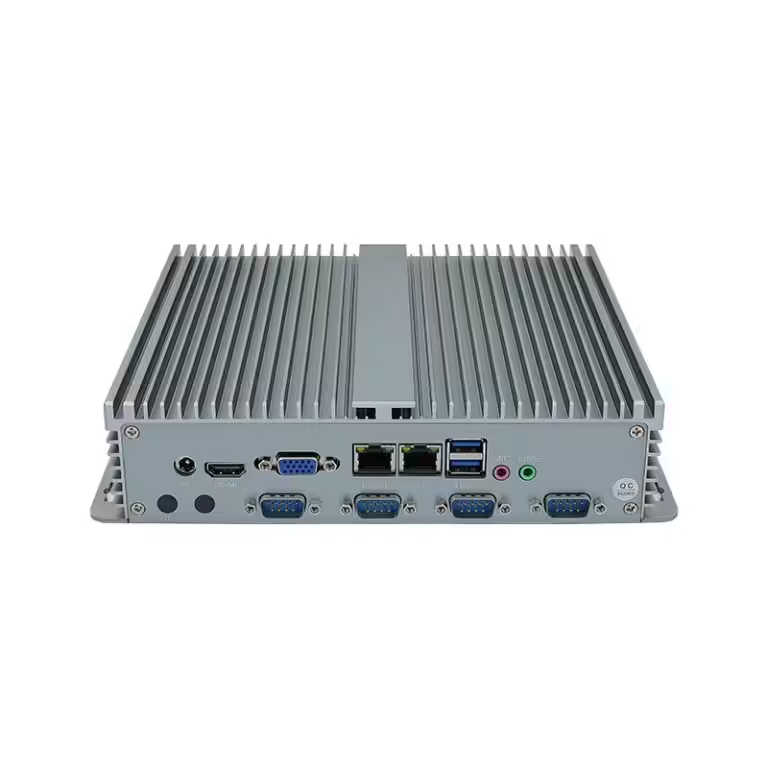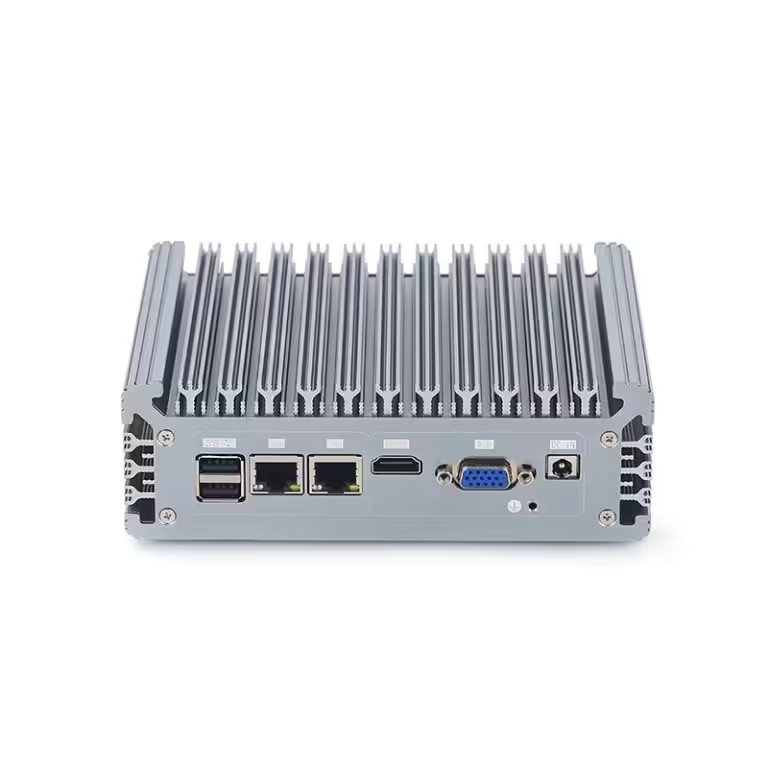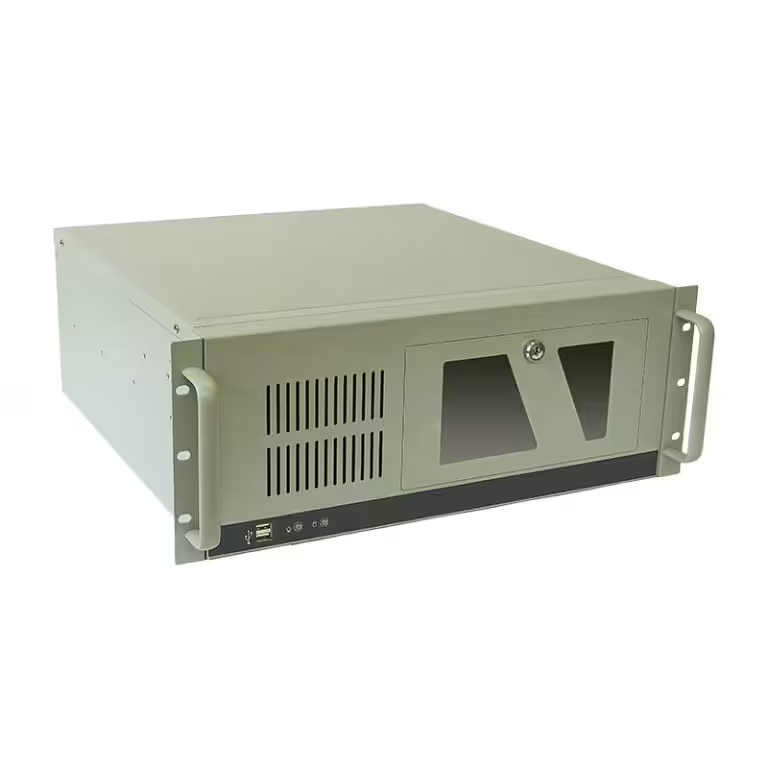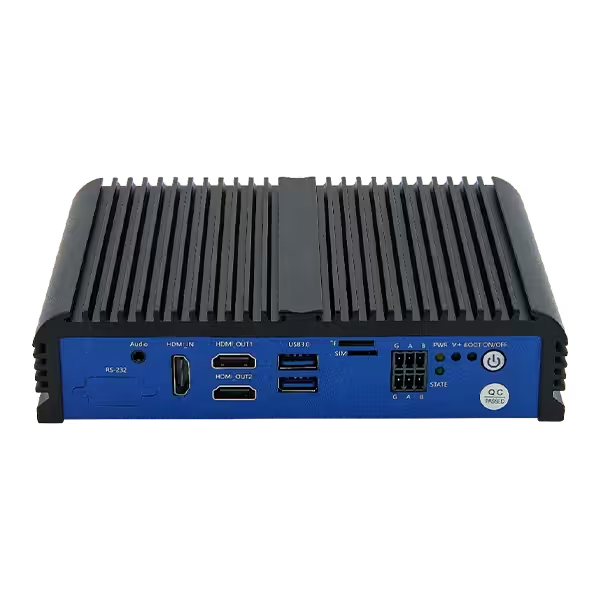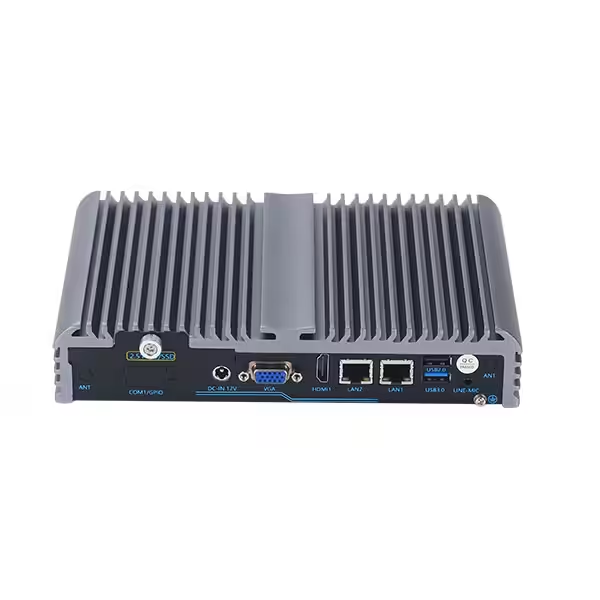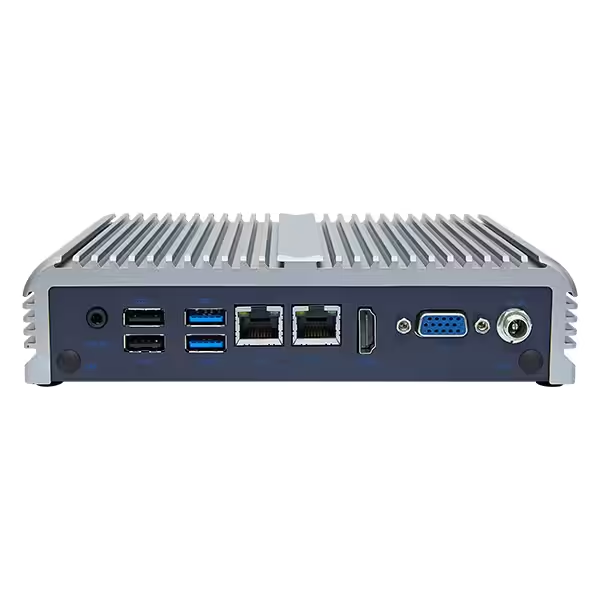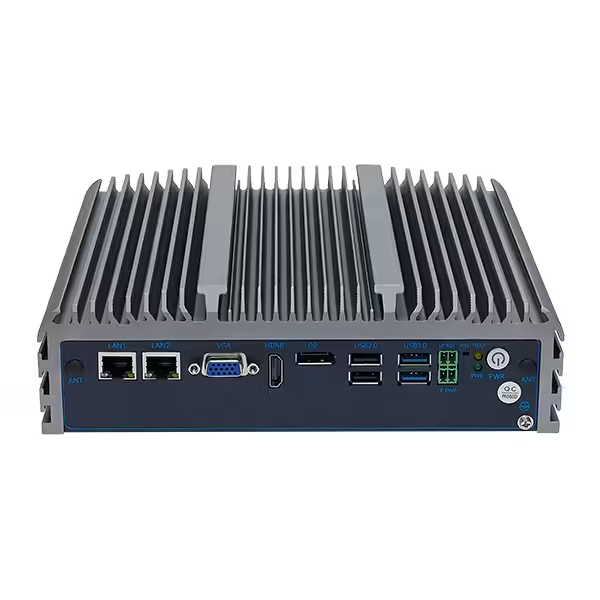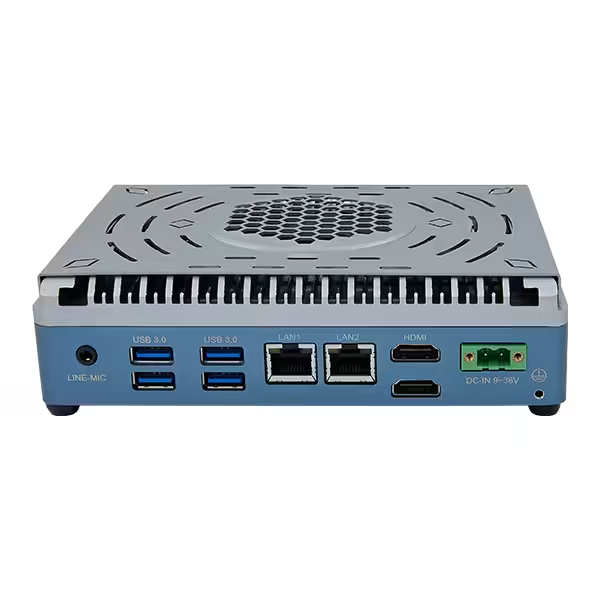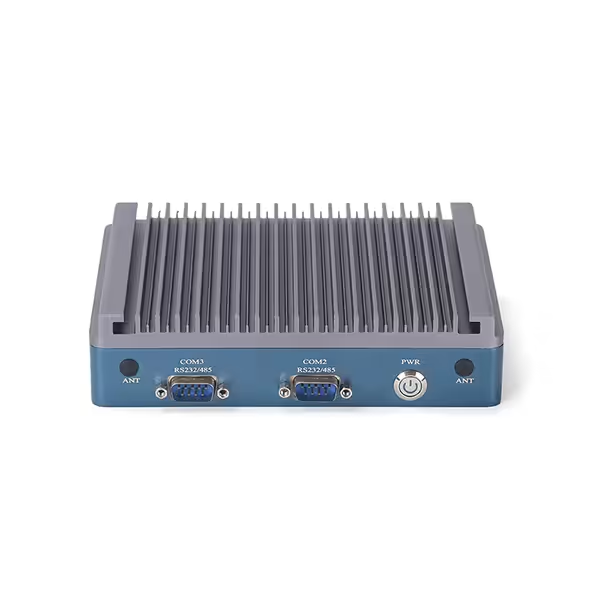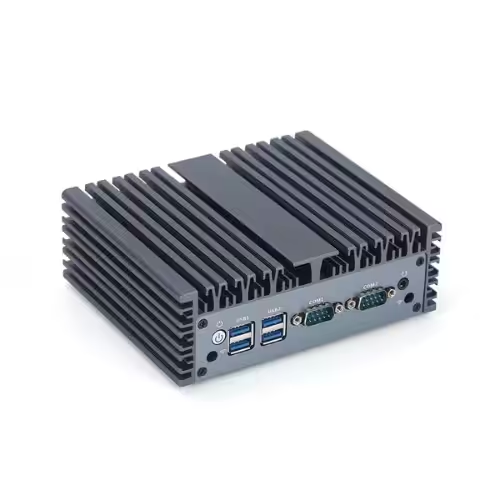
Fanless industrial computers are widely used in factories, machines, transportation systems, edge computing platforms, and other demanding environments where conventional computers may require frequent maintenance or struggle with dust, vibration, and continuous operation.
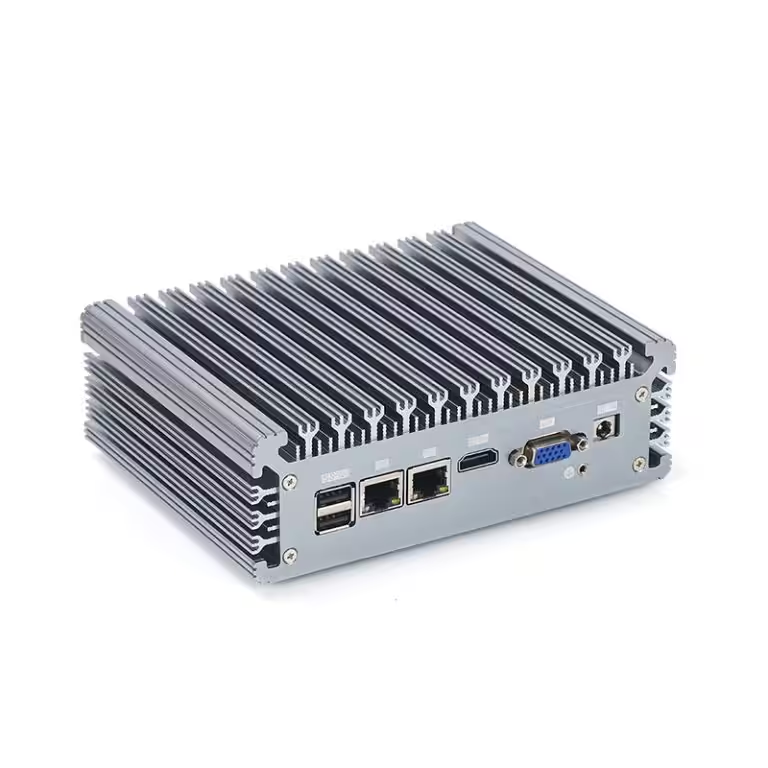
Unlike traditional PCs that rely on mechanical cooling fans, fanless industrial computers use passive thermal management to transfer heat through heat sinks, thermal materials, and the metal chassis. Removing cooling fans creates several practical advantages, including higher reliability, lower maintenance requirements, better resistance to dust, improved vibration tolerance, quieter operation, and more flexible installation.
For industrial applications that require stable 24/7 computing, these benefits can reduce downtime and lower long-term operating costs.
Higher Reliability and Longer Service Life
Reliability is one of the main advantages of fanless industrial computers.
Industrial systems often operate continuously for long periods. Computers used for automation control, HMI, machine monitoring, industrial IoT, and edge computing may run 24 hours a day with limited opportunities for maintenance.
Fewer Moving Parts and Failure Points
Traditional fan-cooled computers rely on fan blades, motors, and bearings to move air through the system. These mechanical components operate whenever cooling is required and can gradually wear over time.
Dust can also accumulate around fan blades and heat sinks, reducing cooling efficiency and increasing the risk of fan-related problems.
Fanless industrial PCs eliminate these mechanical cooling components. Heat is transferred away from the processor through passive thermal management instead of rotating fans.
Fewer moving parts mean fewer potential mechanical failure points.
This does not mean every fanless computer automatically lasts longer than every fan-cooled system. Overall reliability still depends on component quality, processor selection, thermal design, storage, power supply, and operating conditions. However, eliminating cooling fans removes one common source of mechanical wear.
Stable 24/7 Operation
Fanless industrial computers are particularly well suited to continuous-duty applications.
They are commonly used for:
- Industrial automation
- HMI systems
- Machine control
- Production monitoring
- Data acquisition
- Industrial IoT gateways
- Edge computing
- Remote monitoring systems
Because passive cooling does not depend on fan motors operating continuously, the cooling system requires less mechanical maintenance during long-term operation.
For production environments where computer failure can interrupt machinery or stop a process, improved hardware reliability can have a direct impact on plant uptime.
Lower Maintenance Requirements
Industrial computers are often installed in locations where maintenance is inconvenient or expensive.
A PC may be mounted inside a control cabinet, integrated into production machinery, installed on an AGV, or placed at a remote monitoring site. Reaching the system simply to clean or replace a cooling fan can create unnecessary service work.
No Fan or Filter Maintenance
Fan-cooled computers can require periodic attention to maintain proper airflow.
Depending on the environment, maintenance may include:
- Cleaning cooling fans
- Removing accumulated dust
- Cleaning or replacing air filters
- Replacing worn fan assemblies
- Checking blocked ventilation paths
Fanless industrial computers remove the cooling fan from this maintenance cycle.
Without forced-air cooling, there is no fan bearing to replace and no fan intake to become clogged. This can significantly reduce routine cooling-system maintenance.
Reduced Service Interruptions
Lower maintenance requirements become more valuable as the number of deployed computers increases.
A factory operating dozens of industrial PCs may spend considerable time inspecting, cleaning, or replacing cooling components. Fanless systems can reduce this maintenance burden.
For remote or difficult-to-access equipment, fewer service visits can be even more important.
Less maintenance does not only save labor. It can also reduce the number of times equipment needs to be stopped or opened for inspection.
This makes fanless industrial PCs attractive for long-term installations where reliable operation and minimal intervention are priorities.
Better Dust and Contaminant Resistance
Dust is a major challenge for computers installed in industrial environments.
Metal particles, textile fibers, wood dust, oil mist, agricultural debris, and other airborne contaminants can gradually enter conventional computers through cooling airflow.
Reduced Dust Intake Without Cooling Fans
Traditional PCs use fans to pull outside air through the enclosure. While this airflow removes heat, it can also carry contaminants directly toward internal electronic components.
Fanless computers do not require forced-air intake for cooling.
This makes it easier to design enclosed systems that reduce the amount of dust entering the chassis.
Less internal contamination can help protect:
- Circuit boards
- Storage devices
- Connectors
- Memory modules
- Power components
- Internal heat-transfer surfaces
Reducing dust buildup also helps maintain consistent thermal performance over time.
Better Protection in Dirty Industrial Environments
Fanless industrial PCs are commonly used in environments where airborne contamination is difficult to avoid.
Examples include:
- Metalworking facilities
- Wood processing plants
- Textile production
- Warehouses
- Mining applications
- Agricultural equipment
- Food processing areas
- Manufacturing workshops
Some fanless industrial computers are also available with sealed or IP-rated enclosure designs for additional environmental protection.
The exact IP rating depends on the chassis, connectors, and I/O design. Buyers should therefore verify the specific protection rating required for each application rather than assuming every fanless PC provides the same level of ingress protection.
Better Shock and Vibration Resistance
Industrial computers are frequently exposed to vibration that would not normally occur in office environments.
Production machinery, conveyor systems, robotic equipment, vehicles, AGVs, and transportation platforms can transmit continuous vibration through mounting structures.
No Fan Bearings Affected by Continuous Vibration
Cooling fans contain rotating components and bearings.
In applications with frequent vibration or shock, these mechanical parts can experience additional stress.
Fanless industrial computers remove fan motors and fan bearings from the system entirely.
When combined with solid-state drives, reinforced component mounting, and rugged metal enclosures, the fanless architecture can improve suitability for vibration-prone environments.
Suitable for Machinery and Mobile Equipment
Fanless industrial PCs are frequently integrated into moving or vibration-heavy systems such as:
- AGVs and AMRs
- Industrial robots
- CNC machinery
- Transportation systems
- Forklift terminals
- Mobile inspection equipment
- Automated production lines
For these applications, fewer mechanical components can improve long-term stability.
Shock and vibration resistance still depends on the specific mechanical design and certification of the computer, but fanless architecture provides a strong foundation for rugged industrial hardware.
Wide Operating Temperature Capability
Industrial computers are not always installed in temperature-controlled environments.
A system may need to operate inside a hot electrical cabinet, a cold warehouse, outdoor equipment, a vehicle, or a production area with significant temperature variation.
Reliable Operation in Hot and Cold Environments
Many industrial fanless PCs are available with extended operating-temperature options.
Depending on the model and configuration, systems may support temperature ranges such as -20°C to 60°C, -20°C to 70°C, or other wider industrial ranges.
This can make them suitable for:
- Cold storage facilities
- Outdoor monitoring systems
- Vehicle-mounted equipment
- Hot factory environments
- Warehouses
- Unconditioned production areas
The exact temperature capability depends on processor selection, SSD, memory, enclosure design, and thermal engineering.
Industrial Thermal Design
Fanless computers manage heat through passive thermal conduction.
Heat generated by the processor is transferred through thermal pads, heat spreaders, heat pipes, or other thermal interfaces toward the metal enclosure.
The chassis then acts as part of the heat-dissipation system.
This design allows the computer to cool without relying on continuous mechanical airflow.
For industrial installations, passive thermal design can be especially useful where dust, vibration, or limited maintenance access makes fan-based cooling less desirable.
Energy Efficiency and Lower Heat Generation
Energy efficiency is another important advantage of many fanless industrial computers.
These systems are often designed around processors that provide sufficient industrial computing performance without excessive power consumption.
Low-Power Industrial Computing
Many automation and monitoring applications do not require maximum desktop-class CPU performance.
Tasks such as PLC communication, HMI control, data collection, equipment monitoring, IoT gateways, and industrial networking can often run efficiently on low-power processors.
Fanless industrial computers frequently use low-TDP CPUs designed to balance performance and energy use.
This can help reduce electricity consumption when systems operate continuously throughout the year.
For factories deploying many industrial computers, even moderate reductions in power consumption can contribute to lower long-term operating costs.
Reduced Heat Output
Lower power consumption also reduces heat generation.
When a processor consumes less electrical power, it generally produces less waste heat.
This makes passive cooling more practical and helps reduce thermal stress inside the enclosure.
Lower heat output can be especially beneficial when industrial PCs are installed inside:
- Control cabinets
- Machine enclosures
- Kiosks
- Vehicles
- Compact automation equipment
Actual system power consumption still depends on CPU workload, memory, storage, peripherals, expansion cards, and connected devices.
However, fanless systems are commonly optimized around efficient hardware suitable for continuous industrial use.
Compact and Flexible Installation
Industrial equipment often provides very limited space for computing hardware.
A computer may need to fit behind a machine panel, inside a control cabinet, underneath equipment, or inside a mobile platform.
Space-Saving Fanless Design
Removing large cooling fans and dedicated airflow channels can help reduce enclosure size.
Many fanless industrial PCs use compact metal housings that can be integrated into equipment without taking up excessive space.
This can be particularly useful in machine-building projects where every part of the enclosure must fit within a fixed mechanical design.
Flexible Mounting Options
Fanless industrial computers can support different installation methods depending on the model.
Common options include:
- Wall mounting
- DIN-rail mounting
- VESA mounting
- Desktop installation
- Embedded integration
- Cabinet installation
Their compact design allows them to be used in control panels, machinery, AGVs, kiosks, edge computing systems, and other space-constrained applications.
Despite their small size, many fanless industrial PCs still provide multiple industrial interfaces such as Ethernet, USB, RS232/422/485, CAN, GPIO, HDMI, DisplayPort, and wireless connectivity.
This combination of compact size and industrial I/O makes integration easier for equipment manufacturers and automation engineers.
Quiet Operation
Fanless industrial computers do not generate cooling-fan noise.
Without rotating fan blades or airflow turbulence, the system operates virtually silently.
No Mechanical Fan Noise
Noise reduction may not be the first consideration in most factories, but it can be valuable in specific industrial environments.
Examples include:
- Laboratories
- Cleanrooms
- Medical equipment
- Control rooms
- Test and measurement systems
- Noise-sensitive production areas
Removing forced airflow can also be useful in environments where unnecessary air movement should be minimized.
Quiet operation is therefore an additional advantage of fanless architecture, particularly in specialized industrial and technical applications.
Lower Total Cost of Ownership
The long-term value of a fanless industrial computer is not determined only by its purchase price.
For many industrial users, maintenance costs, downtime, replacement frequency, and service requirements are equally important.
Lower Maintenance and Replacement Costs
Fanless systems can reduce expenses related to:
- Fan replacement
- Air-filter maintenance
- Cooling-system cleaning
- Service visits
- Dust-related failures
These savings become more significant across large deployments or systems expected to remain in service for many years.
Reduced Downtime Costs
Industrial downtime can cost far more than the price of a computer.
If a computer controls production machinery, monitors a process, or connects equipment to a factory network, hardware failure can interrupt operations.
By reducing mechanical cooling failures and maintenance requirements, fanless industrial computers can help improve system availability.
For applications where reliability, long service intervals, and continuous operation are priorities, this can produce a lower total cost of ownership over the equipment lifecycle.
FAQ
Are fanless industrial computers more reliable?
Fanless industrial computers can offer higher reliability because they eliminate cooling fans, motors, and bearings that can wear over time. Their reliability also depends on component quality, thermal design, storage, power supply, and operating conditions.
Do fanless industrial PCs require less maintenance?
Yes. Fanless industrial PCs do not require cooling-fan replacement or fan-filter maintenance. Their reduced airflow can also help limit internal dust accumulation, lowering routine maintenance requirements.
Are fanless industrial computers better for dusty environments?
Fanless computers are generally well suited to dusty industrial environments because they do not rely on fans drawing outside air through the system. Some models also use sealed or IP-rated enclosures for additional protection.
Can fanless industrial PCs run 24/7?
Many fanless industrial computers are designed for continuous 24/7 operation in automation, monitoring, HMI, IoT, and edge computing applications. The system should still be selected according to workload, temperature, storage, and power requirements.
What are the main advantages of fanless industrial computers?
The main advantages include higher reliability, lower maintenance, reduced dust intake, better shock and vibration resistance, wide-temperature options, lower power consumption, compact installation, quiet operation, and lower long-term operating costs.