Modern factories depend on continuous control, real-time data processing, and reliable communication between machines, sensors, and automation systems. In these environments, computer failure can interrupt production, delay orders, and increase maintenance costs. Standard commercial PCs are often not designed for constant operation under heat, dust, vibration, and unstable power conditions.
Industrial computers solve this problem with rugged hardware, long product lifecycles, flexible I/O, and thermal designs built for continuous use. These characteristics make industrial PCs a practical choice for factories that need stable 24/7 control and predictable performance over long operating periods.
The Uptime Imperative in Modern Factories
The High Cost of Downtime
Modern manufacturing operates as a continuous flow process. Raw materials enter one end of the line. Finished products exit the other end. Any interruption in this flow creates immediate financial consequences. A single failed computer can stop an entire production line. The cost of that downtime adds up quickly.
Consider what happens when a line stops:
- Workers still receive their pay
- Materials already in process may become waste
- Energy costs continue for equipment that cannot produce
- The factory must pay overtime to catch up on lost production
These factors push the true cost beyond the hourly production value. Every minute of unplanned stoppage reduces the plant’s profitability. Even a thirty-minute delay can erase the profit margin for an entire day.
The financial impact extends beyond the factory floor. Late shipments damage customer relationships. Production delays create bottlenecks in the supply chain. The factory may need to rush orders through expensive expedited shipping. These hidden costs make downtime even more expensive than initial calculations suggest. Factory managers must treat every minute of production time as a valuable asset.
Defining the Role of Industrial PCs
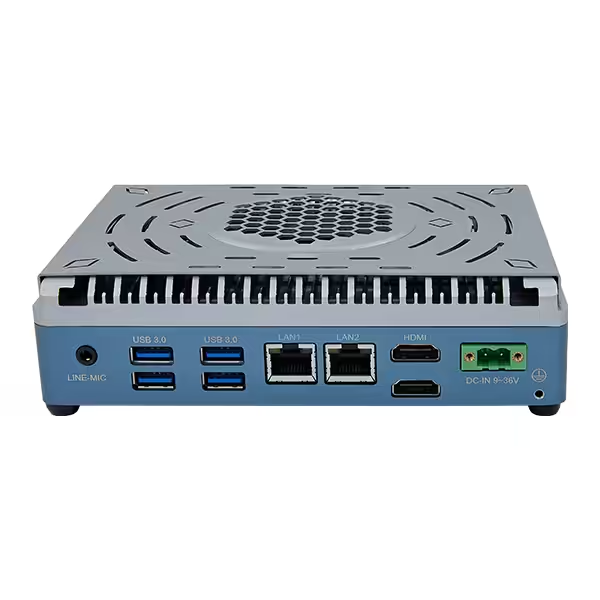
Industrial computers serve as the digital backbone of modern factories. An industrial pc does not just run software. It provides direct control of the machinery on the factory floor. It monitors product quality through sensors and cameras. It collects data from every stage of production. These tasks happen in real time with no room for delay.
The design goal of an industrial unit differs from a consumer desktop. A consumer device focuses on performance and price. An industrial pc focuses on predictability and longevity. The system must run the same process for years without failure. Components are chosen for stability, not for speed. The machine behaves the same on day one as on day 1,000. This reliability allows factory managers to plan production schedules with confidence. The industrial pc becomes a trusted component in the larger system of industrial automation.
Each system supports the broader goals of automation. The hardware must communicate with programmable logic controllers, sensors, and interfaces. This integration requires stable operation across continuous data streams. The value of industrial computers lies in performing these tasks without interruption.
Key Design Features for 24/7 Reliability
Fanless Cooling and Thermal Management
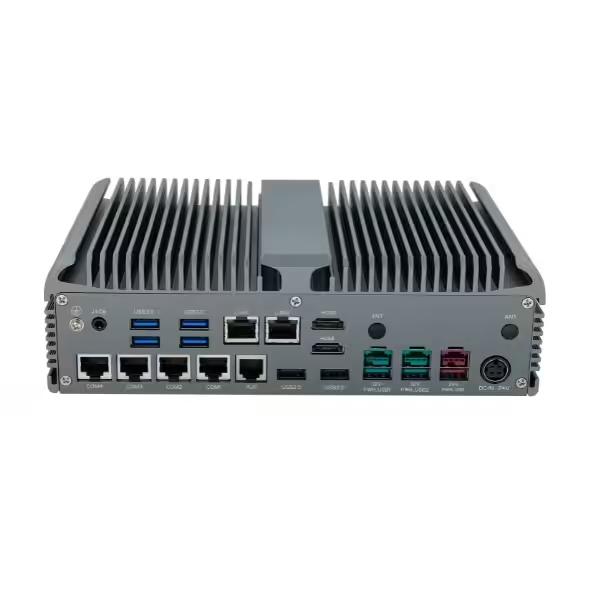
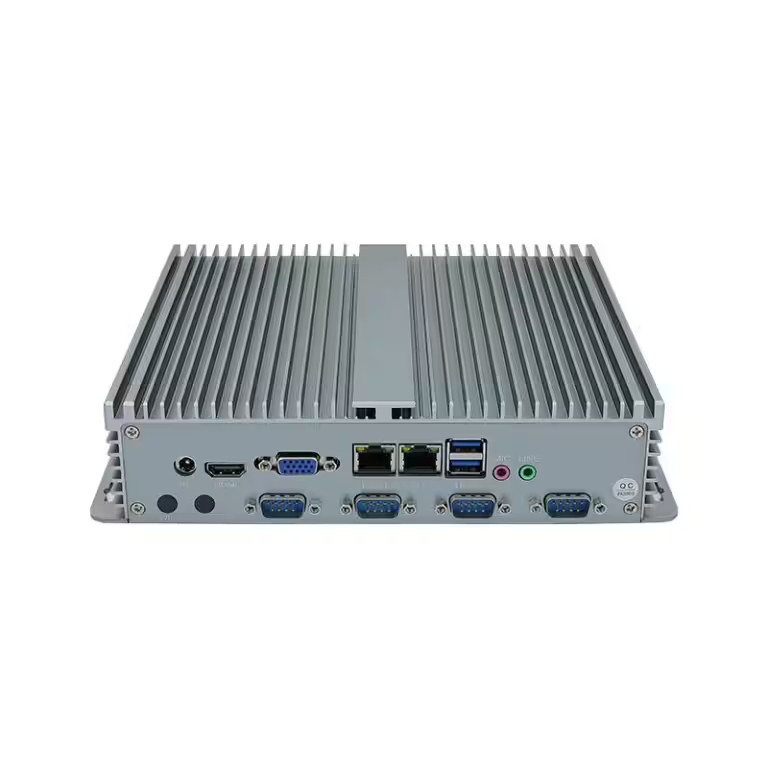
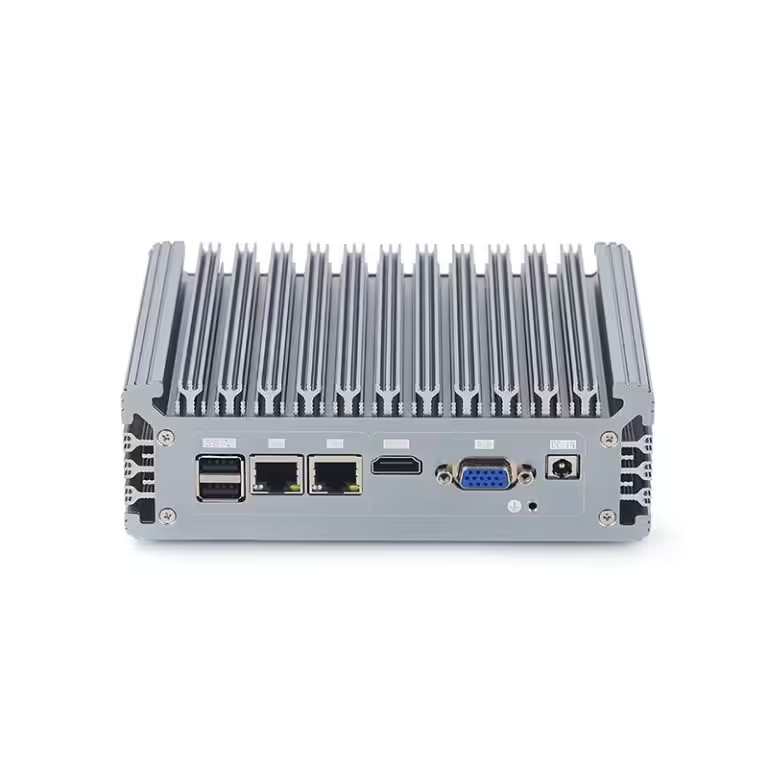
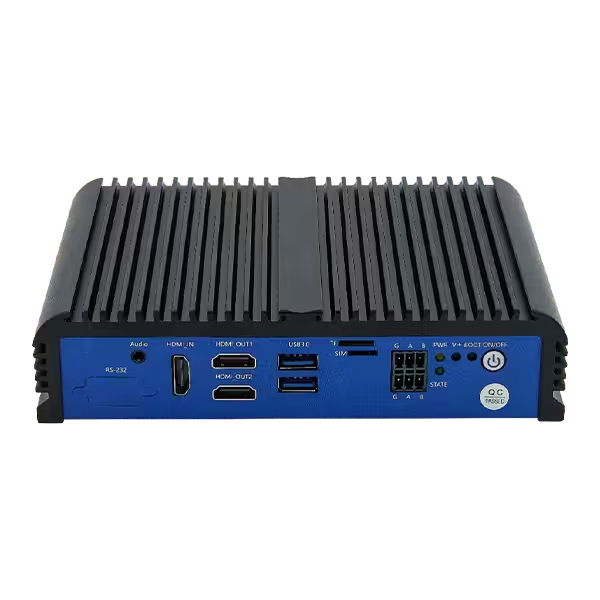
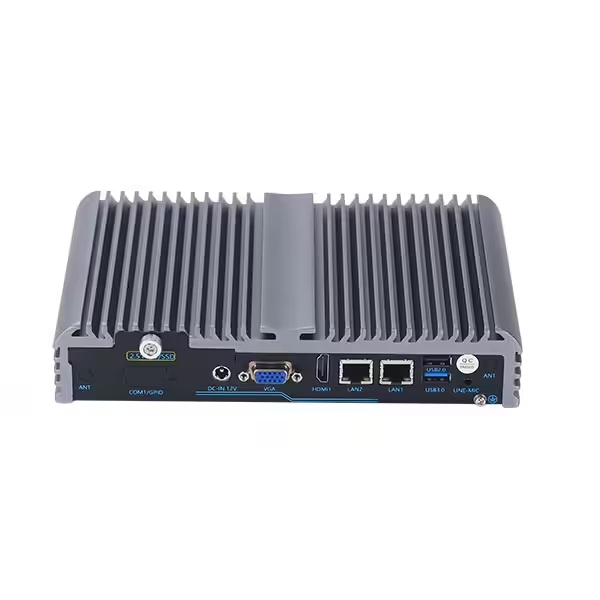
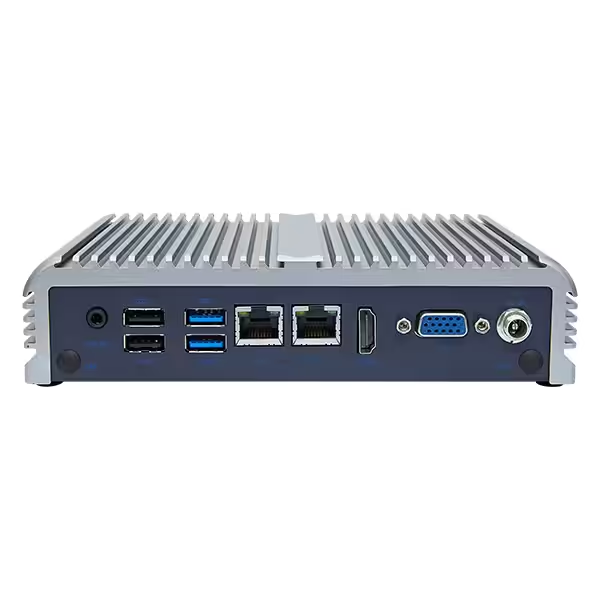
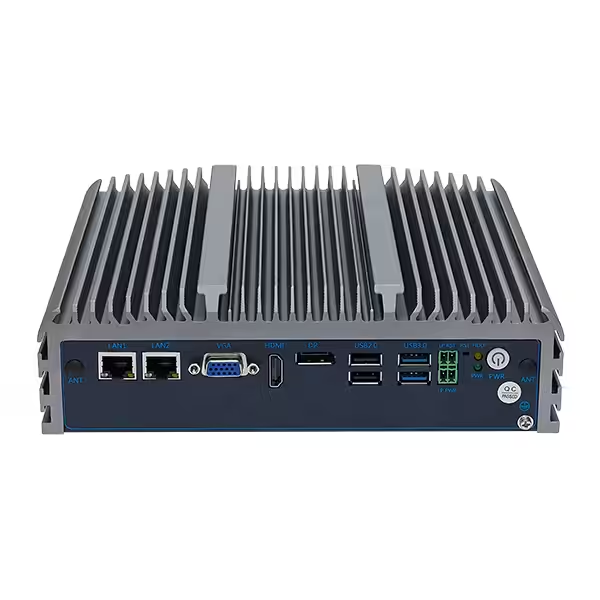
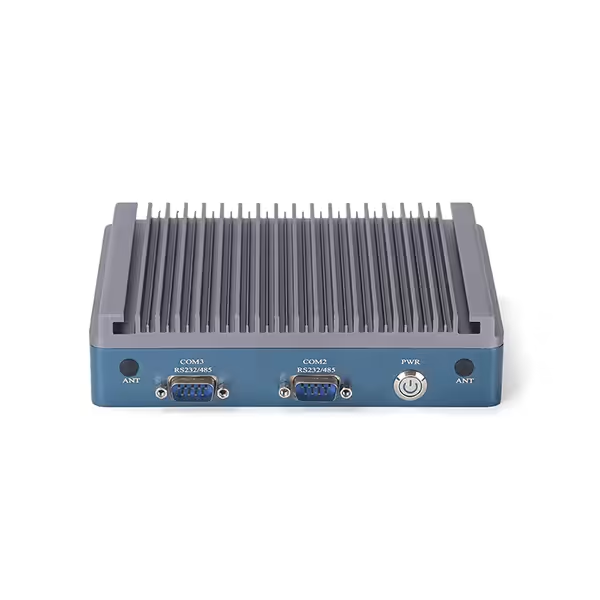
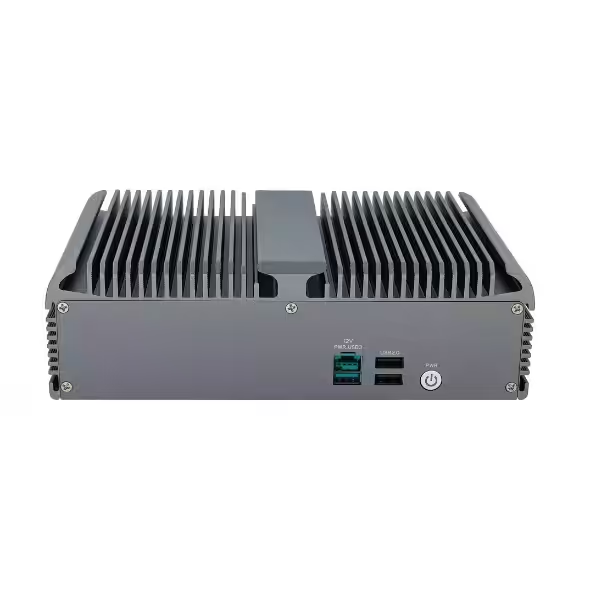
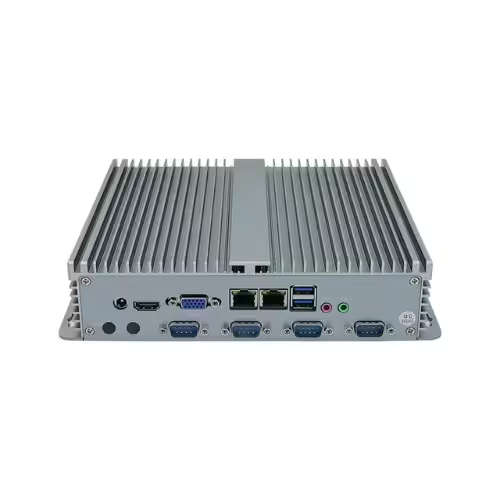
Heat is a major cause of electronic failure. Unlike standard desktop computers that rely on cooling fans, many industrial computers use fanless designs with aluminum heatsinks and metal enclosures to dissipate heat through conduction and natural convection.
Removing fans eliminates a common mechanical failure point and reduces dust entering the system. This is especially important in factories, workshops, and control cabinets where airborne particles can accumulate on internal components and affect cooling.
Industrial PCs also use optimized internal layouts and dedicated thermal pathways to keep processors, storage devices, and power components within safe operating temperatures during continuous operation.
Wide-Temperature and Shock-Resistant Components
Industrial computers use components selected for long-term stability under demanding operating conditions. Depending on the model, they may support wider temperature ranges than standard commercial PCs, making them suitable for factories, outdoor equipment, vehicles, and other harsh environments.
Their mechanical construction is also designed for vibration and shock resistance. Reinforced enclosures, secure mounting, and carefully fixed internal components help prevent connections from loosening during continuous machine operation.
Industrial PCs often use mature hardware platforms with long product lifecycles and stable driver support. This allows manufacturers to maintain the same system configuration for longer periods and makes replacement or expansion easier.
Together, thermal control, rugged construction, and long-life components help industrial computers deliver the reliability required for 24/7 control systems.
Surviving the Factory Floor Environment
The factory floor presents a hostile environment for electronic equipment. Dust particles float through the air. Machinery creates constant vibration. Power surges travel through electrical lines. Temperatures swing between extremes. Consumer computers fail quickly under these conditions. Industrial computers must survive them for years. The chassis design and power systems make this survival possible.
Ruggedized Chassis and Power Resilience
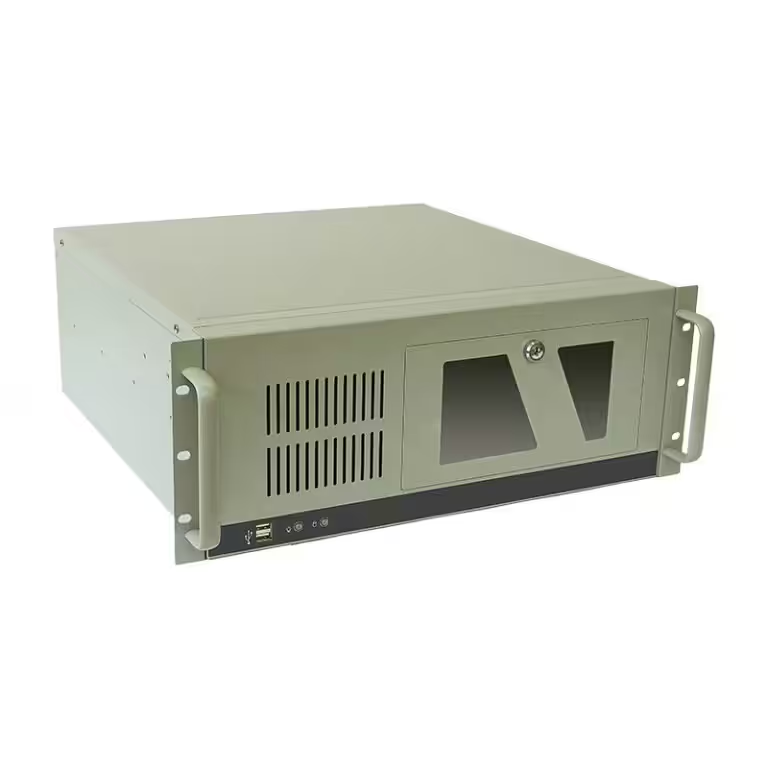
The chassis of an industrial pc serves as its first line of defense. Manufacturers build these enclosures from thick aluminum or steel. The metal construction provides structural rigidity. It also acts as a heat sink. Sealed gaskets cover every opening. This sealing prevents dust from entering the system.
Mounting options add protection. The system can attach directly to machine frames. It can mount on walls or inside cabinets. Vibration dampeners reduce the impact of nearby equipment. These solutions keep the system stable.
Power resilience matters as much as physical protection. Factory power lines carry fluctuations from large motors. The system accepts a wide range of DC input voltages. This tolerance allows the system to ride through voltage sags. The power supply filters out electrical noise. Clean power reaches the internal components.
Flexible I/O for Seamless Integration
Factory floors contain a mix of old and new equipment. Legacy machinery often uses serial communication ports. Newer equipment uses Ethernet or USB. The system must connect to both types. The system includes multiple serial ports directly on the motherboard. These ports eliminate the need for external adapters. Adapters add failure points. Direct serial connections provide reliable communication with older controllers.
Isolated digital I/O channels give the industrial pc direct control over machinery. These channels use optocouplers to separate the computer circuits from the factory equipment. This isolation protects the computer from voltage spikes. It also prevents ground loops that cause data errors. The system can read sensor inputs and send commands without risk of damage.
The I/O configuration matches the needs of each production line. Manufacturers offer multiple configuration options. A single industrial pc can manage several machines. This flexibility reduces the number of systems needed. Fewer systems mean fewer potential failure points.
Industrial PC vs. Commercial PC: A Comparison
Reliability and Lifecycle Differences
Commercial PCs are designed mainly for office use and shorter replacement cycles. Industrial PCs are built for long-term operation, stable hardware platforms, and environments where frequent hardware changes can disrupt production.
| Feature | Commercial PC | Industrial PC |
|---|---|---|
| Typical lifecycle | Shorter | Longer |
| Component availability | Changes frequently | Long-term availability |
| Environmental resistance | Limited | Higher |
| Maintenance approach | Replace when needed | Maintain for long-term use |
Industrial PCs also use components selected for stability, temperature tolerance, and continuous operation. This makes them better suited to production lines, automation systems, and other applications that require consistent performance over many years.
Total Cost of Ownership and Remote Management
Industrial PCs usually cost more upfront, but longer service life and lower downtime can reduce total ownership costs. Fewer replacements also mean less installation work, system reconfiguration, and production interruption.
Some industrial PCs support remote management technologies such as Intel AMT, allowing technicians to diagnose, restart, or maintain systems without accessing them directly.
For 24/7 industrial control, the value comes not only from hardware durability, but from reducing downtime, maintenance effort, and frequent system replacement.
Conclusion
Industrial computers support 24/7 control by combining reliability, environmental resistance, long-term hardware availability, and flexible connectivity. Fanless cooling, rugged enclosures, wide-temperature components, stable power input, and industrial I/O help them operate where commercial PCs may struggle.
Although industrial PCs usually require a higher initial investment, their longer service life and lower risk of downtime can provide better value over time. For manufacturers running automated production lines, machine control systems, or continuous monitoring applications, choosing hardware designed specifically for industrial environments can help maintain stable operation, simplify maintenance, and reduce unexpected production interruptions.